
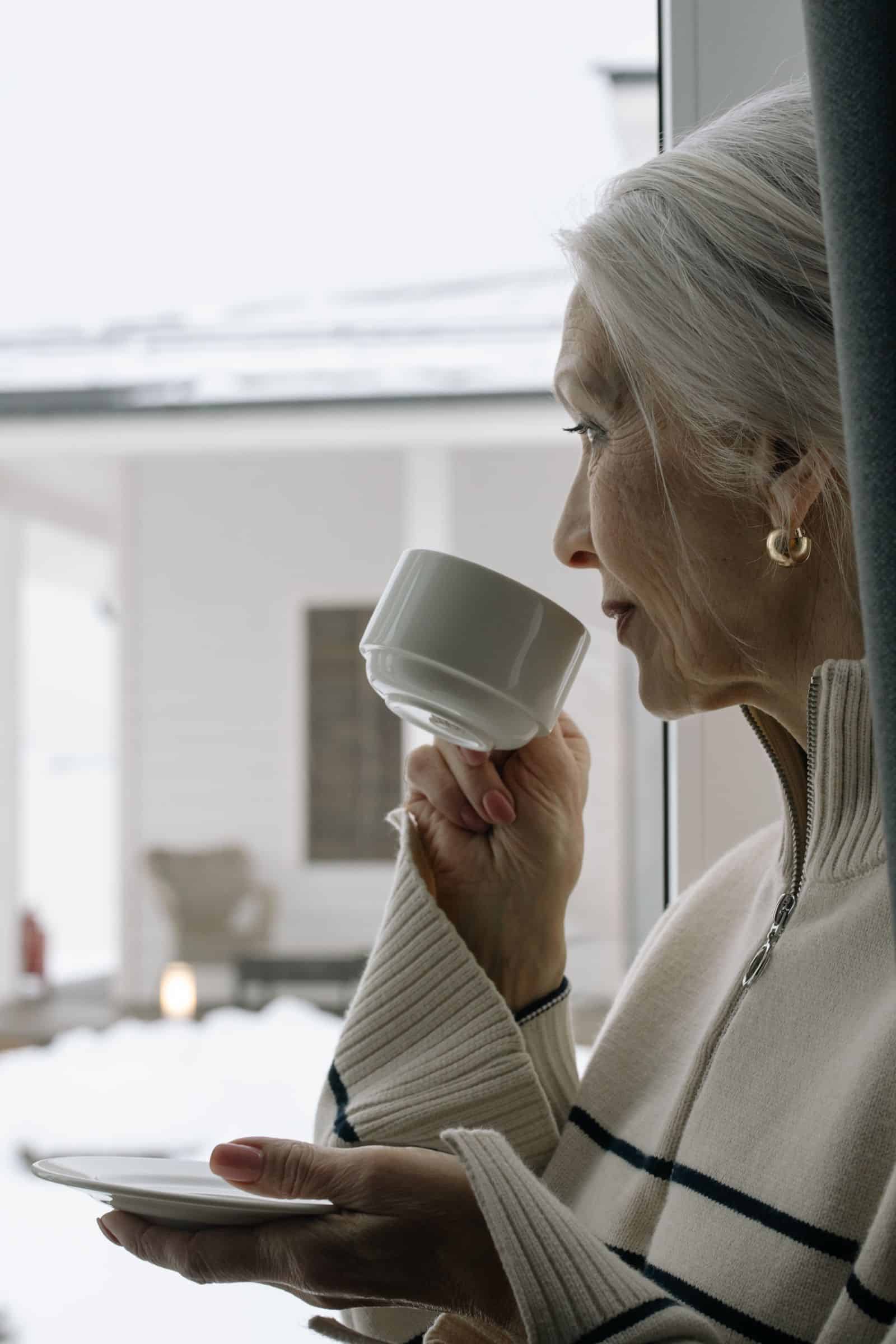
Winter is when the small things start to matter. A house that is a degree or two too cold, a step that has always been a bit awkward, a fridge with less in it than usual. None of these are a crisis on their own, and honestly most families do not notice them until something happens. So this is a practical checklist, written for anyone in Stoke-on-Trent or across Staffordshire who is keeping an eye on an older parent or relative living at home, whether you see them every day or once a fortnight.
Why does winter hit older people harder?
Older bodies lose heat faster and feel the cold less, which is a dangerous combination, because someone can be genuinely too cold without realising it. Cold also thickens the blood and raises blood pressure, so the risk of heart attacks and strokes goes up in a cold house. Add in darker evenings, icy paths, seasonal bugs and the fact that people simply go out less and see fewer faces, and you have a season that quietly wears people down. The NHS advises keeping the main rooms you use heated to at least 18°C, and that single number is a good place to start.
What should I check in the house?
- Heating and temperature. Living room and bedroom at 18°C or above. A cheap room thermometer takes the guesswork out of it. Check the boiler has been serviced and that they know how to use the thermostat and timer rather than switching the heating off to save money.
- Draughts and damp. Curtains drawn at dusk, draught excluders on external doors, and a look for any damp patches, because damp rooms feel colder and are bad for chests.
- Lighting. Bulbs working in the hallway, on the stairs and outside the front door. Most falls in the home happen where lighting is poor.
- Floors and stairs. Loose rugs, trailing cables, anything on the stairs. If there is no handrail on the stairs or grab rail in the bathroom, that is worth sorting now rather than after a fall.
- Outside. A bag of grit or salt by the door for the path. Ice on the front step has caught out more people than you would think.
What should I check about their health?
- Flu and COVID jabs. Free on the NHS for over 65s and for many people with long-term conditions. If they have not had this year’s, book it now, it takes a couple of weeks to give full protection.
- Repeat prescriptions. Enough to cover the Christmas and New Year period when surgeries are shut. Check the dates on what is in the cupboard.
- Eating and drinking. Appetite drops in winter and so does thirst. A full fridge is not the same as a full stomach, so look at what is actually being eaten. Weight loss, dizziness or confusion can all be signs of not eating or drinking enough.
- Chest, breathing, colds. A cold that lingers or a cough that gets worse should be seen by a GP or pharmacist, not waited out.
What are the warning signs that something is wrong?
These are the things that make us pick up the phone when we see them on a visit. If you spot two or three together, take it seriously.
- The house is noticeably cold when you arrive, or they are wearing a coat indoors.
- They seem more confused than usual, more tired, or unusually quiet. In older people, confusion is often the first sign of an infection rather than anything to do with memory.
- Unexplained bruises, or a change in how they walk.
- Post building up, bins not going out, food past its date.
- They have stopped doing something they used to do every week, like going to the shop or church or the club.
Loneliness is a health issue, not just a sad one
This is the bit families underestimate. Long dark evenings and fewer visitors have a real effect on mood, on appetite and on how much someone bothers to look after themselves. Regular contact matters more than long contact. A five-minute phone call every day does more good than a three-hour visit once a month. If you cannot be there, ask a neighbour to knock, or find out what the local library, church or community centre is running over the winter. Stoke-on-Trent and Staffordshire both have a lot going on if you know where to look, and Staffordshire County Council’s adult social care pages are a good starting point.
When is it time to bring in home care?
Not every family needs it, and we will tell you straight if we think you are managing fine. But there are a few situations where a regular visit from a trained carer changes winter from something to worry about into something you can relax about.
- You live too far away to check in as often as you would like.
- Someone has had a fall, a hospital stay or a chest infection and is not quite back to themselves.
- Medication is getting missed or muddled.
- Meals are being skipped, or the house is not being kept warm.
- You are the one doing the caring and you are worn out.
A home care visit can be as little as a 30-minute morning call to check the heating is on, the medication is taken and there is a hot meal in front of them. It does not have to be all or nothing. Most families we support start small and adjust as the winter goes on.
A simple winter routine that works
- Room thermometer in the living room and bedroom. 18°C minimum.
- Flu jab booked. Prescriptions checked through to mid January.
- Hall, stairs and front-door lights working. Grit by the door.
- A daily phone call at the same time each day, from you or from someone.
- One person who has a key and can get in if there is no answer.
- A written list on the fridge: GP, pharmacy, out-of-hours number, and who to call first.
If you want a second pair of eyes
We are a small, family-run, CQC-registered home care provider based in Stoke-on-Trent, and a lot of what we do in winter is exactly this: turning up, checking the things on this list, and telling families honestly what we see. If you would like us to come and look at what would help, the assessment is free and there is no obligation. Call us on 01782 528087 during office hours, or our 24-hour line on 07944 200990 if something has already gone wrong and you need someone quickly.
Ready to talk? Call us on 01782 528087 (Mon–Fri 9am–5pm) or use our 24-hour line on 07944 200990 at any time.
Book a free assessment